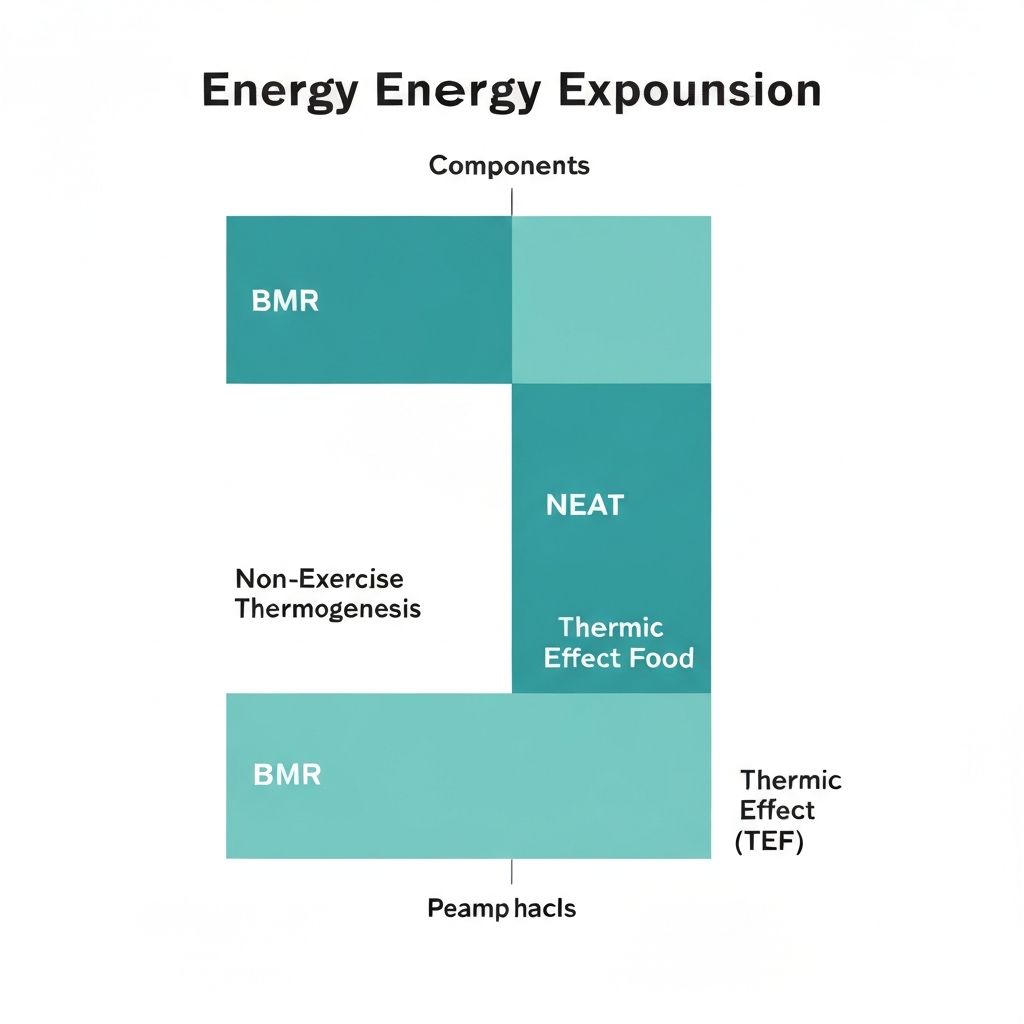
Energy Expenditure Components Explained
Total daily energy expenditure is not a monolithic figure but rather a combination of distinct physiological and behavioural components. Understanding these categories provides important context for discussions of energy balance in UK public health guidance.
The Four Primary Components
UK health professionals and researchers typically categorise total daily energy expenditure (TDEE) into four main components, each influenced by different factors:
Basal Metabolic Rate (BMR)
Basal Metabolic Rate represents the energy required by the body to maintain core functions while at rest. This includes:
Heart and respiratory function
Cellular activity and protein synthesis
Temperature regulation
Kidney, liver, and nervous system function
Circulation and oxygen transport
BMR typically accounts for 60-75% of total daily energy expenditure in sedentary individuals, making it the largest single component.

Thermic Effect of Food (TEF)
Thermic Effect of Food (also called diet-induced thermogenesis) represents the energy required to digest, absorb, and process nutrients from food. This component accounts for approximately 8-15% of total daily energy expenditure.
TEF varies based on macronutrient composition:
Protein: Highest thermic effect, requiring 20-30% of calories consumed to be expended during digestion
Carbohydrates: Moderate thermic effect, approximately 5-10% of calories consumed
Fats: Lowest thermic effect, approximately 0-3% of calories consumed
Non-Exercise Activity Thermogenesis (NEAT)

Non-Exercise Activity Thermogenesis encompasses energy expended during daily living activities outside structured exercise. This component accounts for 15-30% of total daily energy expenditure and can vary substantially between individuals.
NEAT includes:
Occupational activities and work-related movement
Household tasks and cleaning
Leisure activities and hobbies
Postural maintenance and fidgeting
Spontaneous physical activity
Interestingly, NEAT can vary by 2000+ calories per day between individuals in similar circumstances, making it a substantial source of variation in energy expenditure.
Exercise Activity Thermogenesis (EAT)
Exercise Activity Thermogenesis refers to energy expended during intentional physical activity and structured exercise. This component typically accounts for 5-10% of total daily energy expenditure in most individuals, though it can be higher for those regularly engaging in structured activity.
EAT encompasses:
Cardiovascular exercise (running, cycling, swimming)
Resistance training and strength work
Flexibility and mobility activities
Structured sports and organised activities
While EAT is a visible and measurable component, it represents a smaller portion of total expenditure for most people compared to BMR and NEAT combined.
Individual Variation and Contributing Factors
The relative contribution of each component varies substantially between individuals based on multiple factors:
Age and Sex
BMR naturally declines with age. Sex-based differences in body composition influence overall metabolic rate.
Body Composition
Muscle tissue is metabolically more active than fat tissue, influencing BMR independent of body weight.
Genetics
Inherent variation in metabolic rate exists between individuals with similar body composition and activity patterns.
Occupation
Work requirements substantially influence NEAT, accounting for significant variation in total expenditure.
Activity Level
Structured exercise frequency and intensity directly influence EAT contribution to total expenditure.
Environmental Factors
Temperature, altitude, and climate can influence metabolic demands and spontaneous activity levels.
Implications for Energy Balance Discussions
Understanding these components provides important context when interpreting discussions of energy balance in UK public health guidance:
Energy Balance is Multifactorial
Energy deficit cannot be achieved through diet or exercise alone—it emerges from the combined influence of all components.
Individual Responses Vary
Because individuals have different baseline levels of each component and different capacities to modify them, responses to interventions will vary substantially.
Sustainable Adjustments Matter
Rather than trying to drastically reduce food intake or dramatically increase structured exercise, sustainable adjustments to all components may support long-term energy balance changes.
This article is for educational purposes only and provides an overview of energy expenditure components discussed in scientific and public health literature. It does not constitute personalised advice.
Back to Blog